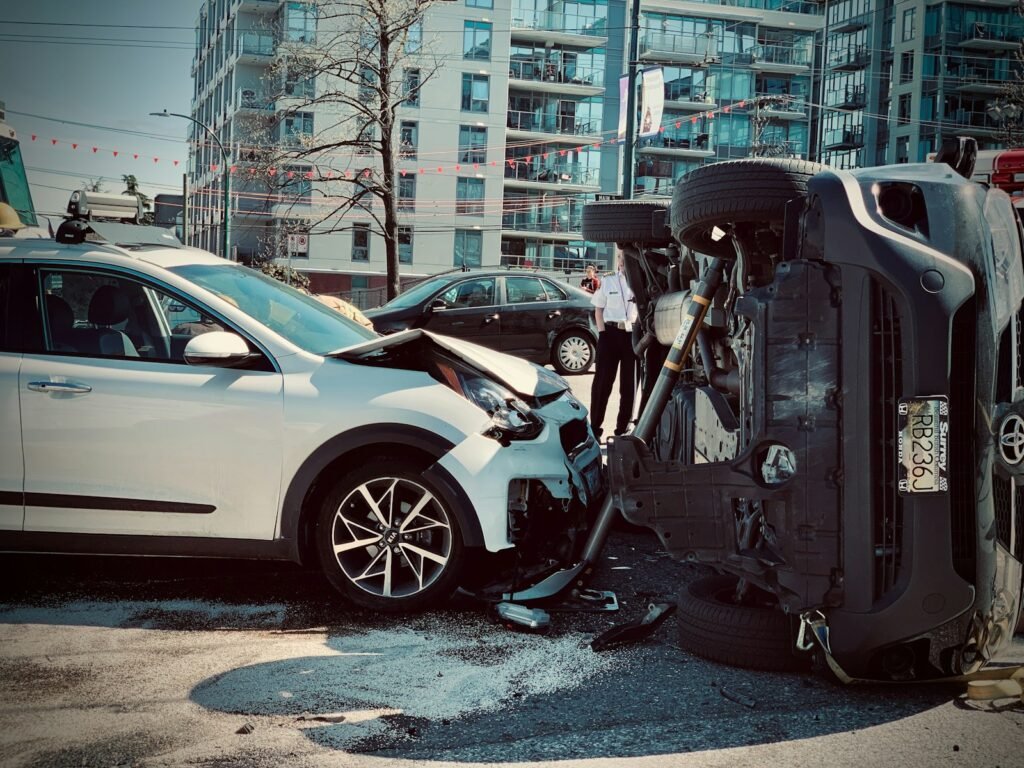
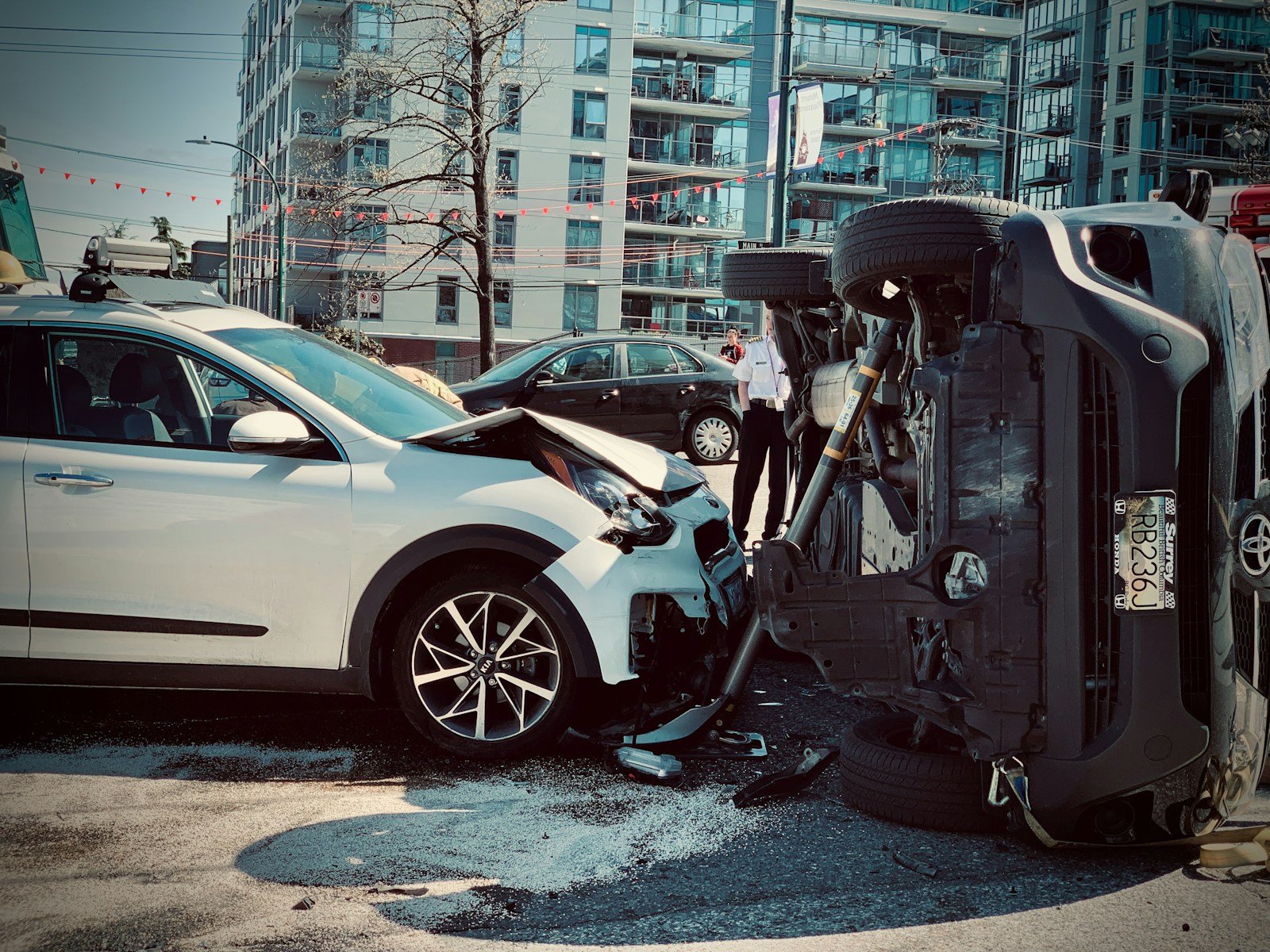
Claims handling has become a media-heavy discipline. A straightforward motor claim might now include dashcam footage, smartphone video, CCTV stills, telematics data, repair photos, and screenshots from customer messages. That richer evidence base helps insurers assess liability faster and challenge fraud more effectively. It also creates a quieter, more complicated problem: how do you circulate useful evidence without disclosing personal data that was never necessary to share in the first place?
This is no longer a niche compliance concern. Claims evidence routinely moves between adjusters, panel solicitors, engineers, TPAs, fraud teams, reinsurers, and, in some cases, opposing parties. Every transfer increases the chance that irrelevant but sensitive details, from a child’s face in the background to a visible medical document on a kitchen table, travel farther than they should.
Insurers can share claims evidence without exposing personal data by building four things into the claims workflow: purpose-based redaction before evidence moves, least-privilege access by role, defensible chain-of-custody records, and sharing derivatives instead of master files. None of this requires losing evidential value. Well-executed redaction removes what is irrelevant and leaves the decision-making substance a reviewer actually needs intact.
Why Evidence Sharing Has Become a Privacy Problem
More evidence means more identifiers
Ten years ago, a claims file was dominated by forms, repair estimates, and a few photos. Today, video and image evidence often carries far more data than the claim handler needs. A short clip from a home security camera may capture neighbours, vehicle registration numbers, children, property layouts, and timestamps. A mobile phone recording of an injury scene may also reveal health information, location data, or conversations in the background.
That matters because privacy rules generally focus on necessity and proportionality. If a third party only needs to confirm impact sequence or weather conditions, why should they also receive identifiable bystanders, unrelated vehicles, or personal items inside someone’s home?

Internal sharing can be just as risky as external disclosure
It is tempting to treat privacy as a problem that begins when evidence leaves the organisation. In practice, over-sharing often starts earlier. Claims teams under time pressure may forward originals to anyone involved in progressing the file. The intention is efficiency; the result is wider access than the claim actually requires.
Insurers that handle this well tend to ask a simple question before sending any evidence: what is the minimum version of this material needed for the next decision? That shift in mindset, from “share the file” to “share the necessary view,” makes a significant difference.
Build Redaction Into the Claims Workflow, Not Around It
Decide what needs to be hidden before the file moves
Redaction works best when it is treated as a routine step in evidence preparation rather than a last-minute fix requested by legal or compliance. The categories are usually predictable:
- Faces of bystanders, minors, and unrelated third parties
- Vehicle registration plates not relevant to liability
- Phone numbers, email addresses, and policy details visible in screenshots or documents
- Medical information not required for the recipient’s role
- Home interiors, addresses, or location markers that create avoidable exposure
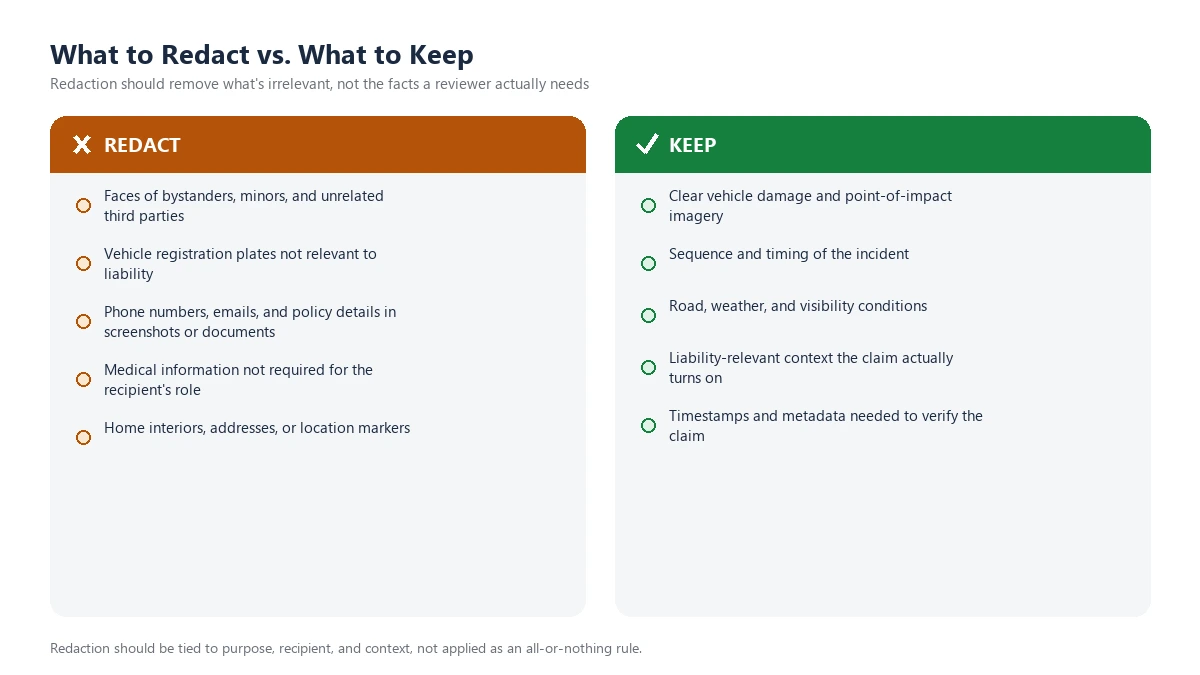
Not every claim needs every element removed. That is the point. Redaction should be tied to purpose, recipient, and context.
The right level of detail depends entirely on who is receiving the evidence and why. A few common examples:
| Recipient | What They Typically Need | What Usually Gets Redacted |
|---|---|---|
| Repair network partner | Clear vehicle damage and point-of-impact imagery | Identifiable occupants, bystanders, background detail |
| Fraud investigator | Fuller context: surrounding footage, timing, behaviour | Unrelated third parties with no connection to the fraud indicators |
| Reinsurer (aggregate exposure review) | Summary-level imagery and claim metrics | Most individual-level personal identifiers |
| Solicitor preparing for litigation | A fuller evidential version for the specific matter | Unrelated third-party data outside the scope of that claim |
Use tools that preserve evidence while limiting disclosure
Manual redaction is possible, but it is rarely sustainable at scale, especially with video. Frame-by-frame editing takes time, introduces inconsistency, and can become a bottleneck in fast-moving claims environments. For teams handling regular volumes of footage, purpose-built approaches to video redaction for insurance companies can help remove unnecessary identifiers while retaining the sequence, timing, and visual context that make evidence useful in the first place.
That balance matters. Poorly handled redaction can undermine credibility if it obscures the very facts a reviewer needs to assess. Effective redaction does the opposite: it removes what is irrelevant and leaves the decision-making substance intact.
Preserve chain of custody and version control
Redacted evidence should not exist as a loose derivative with unclear provenance. Insurers need a defensible process that records what was changed, why it was changed, who approved it, and where the original is stored. In contested claims, those details matter.
A practical approach is to maintain the untouched original in a restricted environment, then generate controlled versions for specific audiences. That allows the business to demonstrate both evidential integrity and privacy discipline. It also reduces the chance that an unredacted file is accidentally reused later because nobody can tell which version is which.
Operational Safeguards Matter as Much as the Technology
Apply least-privilege access to claims evidence
Privacy exposure often comes down to ordinary access design. If everyone in the claims ecosystem can retrieve originals by default, redaction only solves part of the problem. Access controls should reflect role, task, and claim stage.
An adjuster assessing indemnity does not necessarily need the same view as a litigation partner or anti-fraud specialist. Segmenting access sounds administrative, but it is one of the simplest ways to reduce avoidable data handling.
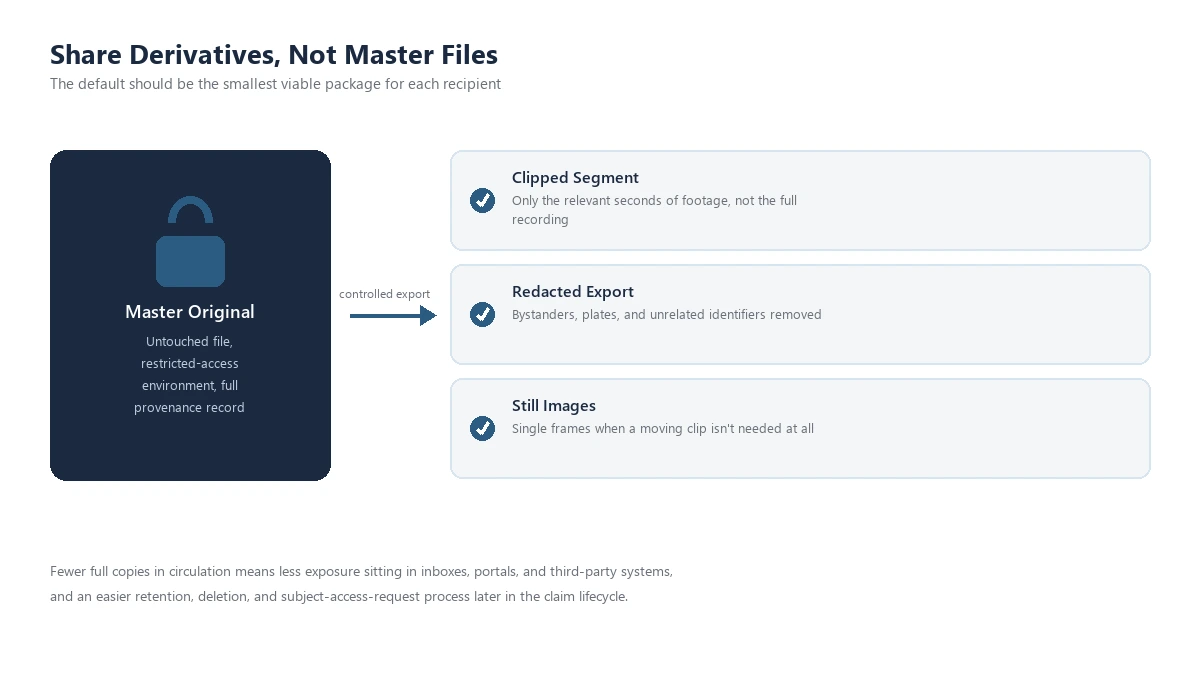
Share derivatives, not master files
When evidence needs to be circulated, the default should be the smallest viable package: a clipped segment rather than a full video, still images rather than a long recording, a redacted export rather than the original upload. This keeps collaboration moving without multiplying the privacy risk sitting in inboxes, portals, and third-party systems.
It also improves file hygiene. The fewer full copies that exist across the claim lifecycle, the easier it becomes to manage retention, deletion, and subject access requests later on.
Train handlers to spot hidden data
Even experienced claims professionals can miss what modern media reveals. A straightforward loss video can contain a smart display showing family schedules, documents on a desk, or audio that gives away more than the visuals do. Training should cover not only policy and regulation, but also the practical habit of scanning for collateral data before sharing evidence onward.
Privacy by Design Leads to Better Claims Handling
There is a tendency to frame data protection as friction. In reality, disciplined evidence sharing often improves operations. Claims teams spend less time recalling files, correcting mistakes, or chasing down inappropriate disclosures. Third parties receive cleaner, more relevant evidence. Customers gain confidence that their information is being handled with care, especially during already stressful events.
That trust is not abstract. In a market where digital claims journeys are expanding, customers are being asked to submit more visual proof, more quickly, and from more devices. They are far more likely to cooperate when insurers can show that evidence will be used precisely, not broadly.
This pattern is not unique to insurance. Across regulated and customer-facing industries, how a business is seen to handle personal information increasingly shapes its reputation as much as the outcome of any individual case does.
The insurers that will manage this best are the ones that stop treating redaction as a specialist exception. It should be a normal part of claims evidence handling, built into review, sharing, and storage from the outset. When that happens, the business does not lose visibility. It gains control.
Frequently Asked Questions
What personal data needs to be redacted from insurance claims evidence?
The most common categories are faces of bystanders and minors who are not part of the claim, vehicle registration plates unrelated to liability, phone numbers, emails, and policy details visible in screenshots or documents, medical information not required for a specific recipient’s role, and home interiors, addresses, or other location markers captured incidentally in photos or video.
Is video redaction required by data protection law for insurers?
Most data protection frameworks do not name video redaction specifically, but they do require necessity and proportionality when sharing personal data, meaning insurers generally cannot justify sending a full, unredacted file to a third party who only needs a narrow view of the evidence. Redaction is one of the practical ways insurers meet that broader obligation, not a distinct legal requirement in its own right.
What’s the difference between redacting evidence and destroying it?
Redaction removes or obscures specific identifying details, such as a bystander’s face or a visible document, while keeping the rest of the file intact and usable. Destruction eliminates the evidence entirely. In claims handling, the untouched original is normally retained in a restricted environment, and redacted derivatives are what get circulated, so the underlying evidence is never lost, only limited in what each recipient sees.
Who typically needs access to unredacted claims evidence?
Very few people in the claims process need the fully unredacted original. It is normally kept in a restricted-access environment for internal reference, legal defensibility, and chain-of-custody purposes, while adjusters, repair partners, reinsurers, and most other recipients work from redacted derivatives suited to their specific role.
Does redacting video evidence weaken it for legal or fraud investigation purposes?
Not when it is done correctly. Effective redaction removes details that are irrelevant to the decision at hand, such as an unrelated bystander’s face, while preserving the sequence, timing, and visual context that make the evidence useful. Redaction only becomes a problem if it obscures the facts a reviewer actually needs, which is why redaction decisions should be tied to purpose and recipient rather than applied uniformly.
How long should insurers keep the original, unredacted evidence file?
Retention periods depend on the type of claim, applicable regulation, and any litigation hold requirements, so there is no single universal answer. What matters operationally is keeping one clearly identified, restricted-access original with a documented chain of custody, rather than letting multiple unredacted copies accumulate across different systems and inboxes over the life of the claim.