
Inactive
Simplifying IT
for a complex world.
Platform partnerships
- AWS
- Google Cloud
- Microsoft
- Salesforce
For law firms
Most people check reviews before calling a lawyer. We help firms get more genuine client reviews and respond to criticism in a way that fits professional rules.
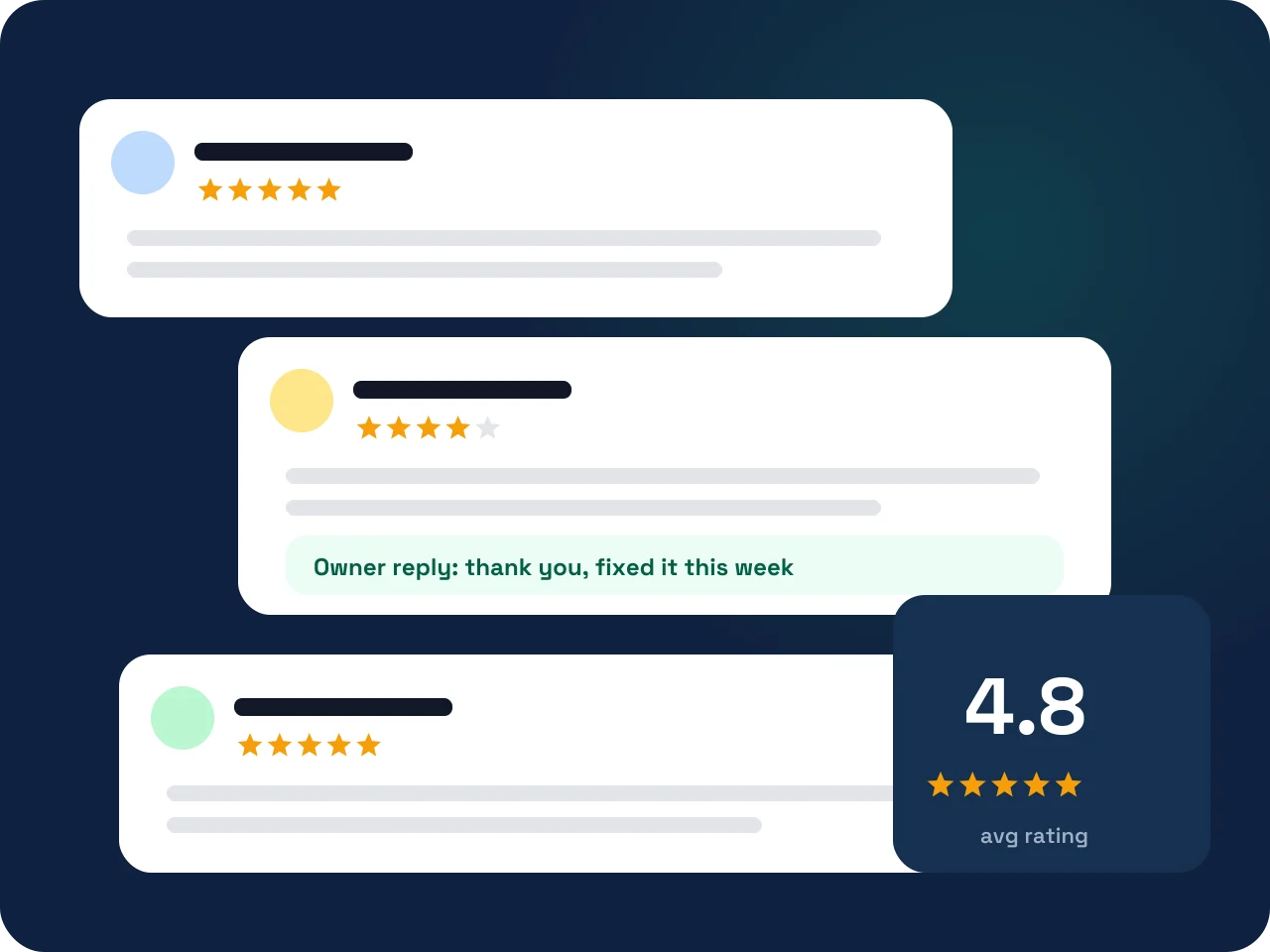
Reputation management for law firms is the work of making sure what a prospective client finds when they search your name, or your firm’s name, is accurate, current and fair: genuine client reviews, correct directory listings, and responses to criticism that respect your duty of confidentiality.
It isn’t about hiding a lost case or deleting an honest but unflattering review. Attorney advertising rules in most jurisdictions already limit what a firm can say about outcomes and how client endorsements can be used, so the work has to fit inside those rules, not around them.
This program sits inside our wider reputation management work, adapted for the advertising and confidentiality rules that apply specifically to law firms. Read more about the agency on our about page.
Most reputation problems get worse when ignored.
Satisfied clients rarely leave reviews unless they are asked at the right time.
Replying to a review can breach client confidentiality if done carelessly.
Legal directories often rank above the firm’s own site.
Built on genuine reviews and accurate information.
We help you get more genuine reviews, respond well to criticism, and make sure the first page of results about you is accurate and up to date.
We don’t write fake reviews, we don’t try to get honest negative reviews removed, and we don’t promise to make legitimate news disappear. Those tactics break platform rules and usually make things worse when they come out.
What law firms usually want to know before they start.
Most bar associations restrict how a firm can advertise results, use client endorsements, or imply a guaranteed outcome. Rules vary by state and country, so what’s allowed in one jurisdiction can be a violation in another.
We check your bar’s advertising rules before touching testimonials or review requests, not after.
Many jurisdictions limit using client reviews that reference a specific case result, or require a disclaimer that past results don’t guarantee future ones. A general “he was great to work with” review is usually fine; one that promises a settlement amount usually isn’t.
We help you request and display reviews in a way that stays inside those limits.
You can’t confirm or deny that someone was a client in a public reply, even to correct a one-star review that gets the facts wrong. That duty holds regardless of what the reviewer already said publicly.
We write responses that acknowledge feedback without confirming the relationship or discussing case details.
A client unhappy about a lost case or a fee dispute is a different problem to an actual bar complaint or disciplinary finding. The first is reputation work; the second is a legal and ethical matter the firm needs to address directly, not optimize around.
We’re upfront about which one we’re looking at before proposing anything.
Avvo, Justia, FindLaw and Martindale-Hubbell profiles often outrank a firm’s own site, and an outdated practice area or an old photo on one of them is usually the first thing a prospective client sees.
We check and update these profiles as part of the work, not as an afterthought.
Reviews, directory changes and mentions of your firm or individual attorneys can show up on Google, Avvo, Yelp or legal-specific sites without anyone noticing for weeks.
We track new activity and report what changed, so nothing sits unanswered for long.
The quick fixes come first; genuine review growth builds over time.
1Week 1
We review search results, directory profiles, existing reviews and social mentions for the firm and each named attorney.
You get: a clear list of what’s accurate, what’s outdated, and what needs a response.
2Weeks 2–4
We correct directory listings, draft confidentiality-safe responses to open reviews, and flag anything that may break platform rules.
You get: accurate profiles and a cleared response backlog within the first month.
3Months 2–4
We set up a review request process that fits your bar’s advertising rules, so satisfied clients get asked at the right moment instead of never.
You get: a steady flow of genuine reviews instead of a handful of old ones.
4Ongoing
We monitor new reviews, directory changes and mentions, and respond within the limits of attorney advertising and confidentiality rules.
You get: a short monthly report, not surprises.
A company that doesn’t understand bar advertising rules can create more risk than it removes.
Written by Nadir Yaqoob, Founder of South Asia Digital · Last updated October 2026
We treat this as advertising-compliance work first, reputation work second: what a firm can say about itself, and what it can ask clients to say, is bounded by bar rules before it’s bounded by what looks good. See our full approach on the reputation management page.
We are a Dubai-based agency and we work with law firms and individual attorneys worldwide. This work, audits, directory fixes, review programs and monitoring, is largely remote, so it applies equally wherever your clients are.
Sources we draw on: ABA Model Rules of Professional Conduct (advertising and confidentiality rules) · Google’s review and contribution policies.
This work is priced by scope, so we’ll give you a fixed quote after a 20-minute call. No hourly surprises.
Yes, carefully. Keep it general, never confirm someone was a client, and offer to talk privately.
Yes. See SEO for personal injury lawyers.
No, not if it’s genuine and doesn’t break platform rules. We make sure it sits alongside enough accurate, positive context instead of being the only thing visible.
Not if it’s set up correctly. We check your bar’s rules first and build the request process around them, so you’re not choosing between more reviews and staying compliant.
Yes. We update practice areas, photos and contact details, since these often outrank the firm’s own site for a lawyer’s name.
That’s a different problem. We’re upfront when something is a disciplinary or ethics matter rather than a reputation one, since it needs to be addressed directly, not optimized around.
We draft response templates and review request language for your approval. We don’t post as you, and we don’t write client-facing content that claims to be from someone else.
It’s built around bar advertising rules and attorney-client confidentiality from the start, rather than applied afterward. See our full reputation management approach.
Book a strategy call. Send us your URL beforehand and we’ll have already looked at it when we talk, so you get specifics, not a sales pitch.