
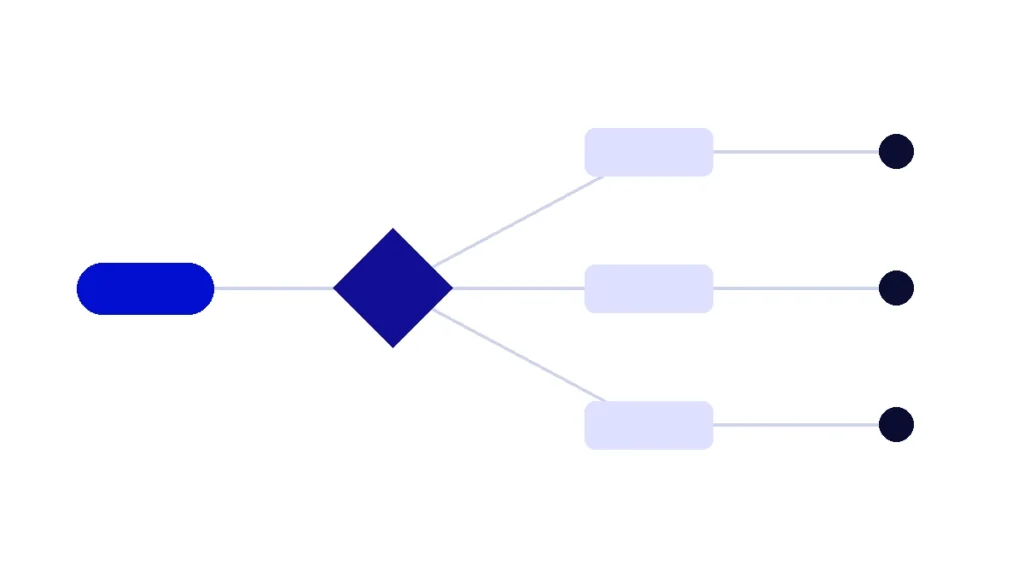
The best marketing automation software for most growing businesses is one of a handful of platforms: HubSpot Marketing Hub for teams that want a CRM built in, ActiveCampaign for sophisticated multi-step automation at a small-business price, Klaviyo or Omnisend for ecommerce brands running on Shopify or WooCommerce, and Brevo or Mailchimp when budget matters more than advanced features. There is no single “best” platform for everyone; the right one depends on your contact list size, your channel mix, and how much automation complexity you actually need.
Below is a direct look at eight platforms, each with a real screenshot of the actual product, current pricing pulled from each vendor’s own pricing page rather than estimated, and honest pros and cons. No platform here is presented as universally best, and none of the pricing is guessed.
Marketing Automation vs Email Marketing: What’s the Difference?
Email marketing software sends messages to a list. Marketing automation software triggers actions based on behaviour: what someone clicked, bought, abandoned, or ignored, across email, SMS, push notifications, and sometimes ads. Every tool on this list does email. Not all of them do genuine behaviour-based automation across multiple channels, and that distinction matters more than most comparisons make clear.
If you only need to send a monthly newsletter, you don’t need most of what’s reviewed here. If you need a cart-abandonment sequence, a lead-scoring workflow, or a welcome series that branches based on what someone clicks, automation depth is what you’re actually shopping for.
Price Tiers, Real Screenshots, and What Each Tool Is Actually Built For
Each platform below is shown as it actually looks on its own marketing pages today, not a stock mockup. Pricing is the current entry-level rate at the smallest contact tier each vendor publishes; nearly every tool on this list scales price with list size, so treat these as starting points, not fixed costs.
HubSpot Marketing Hub
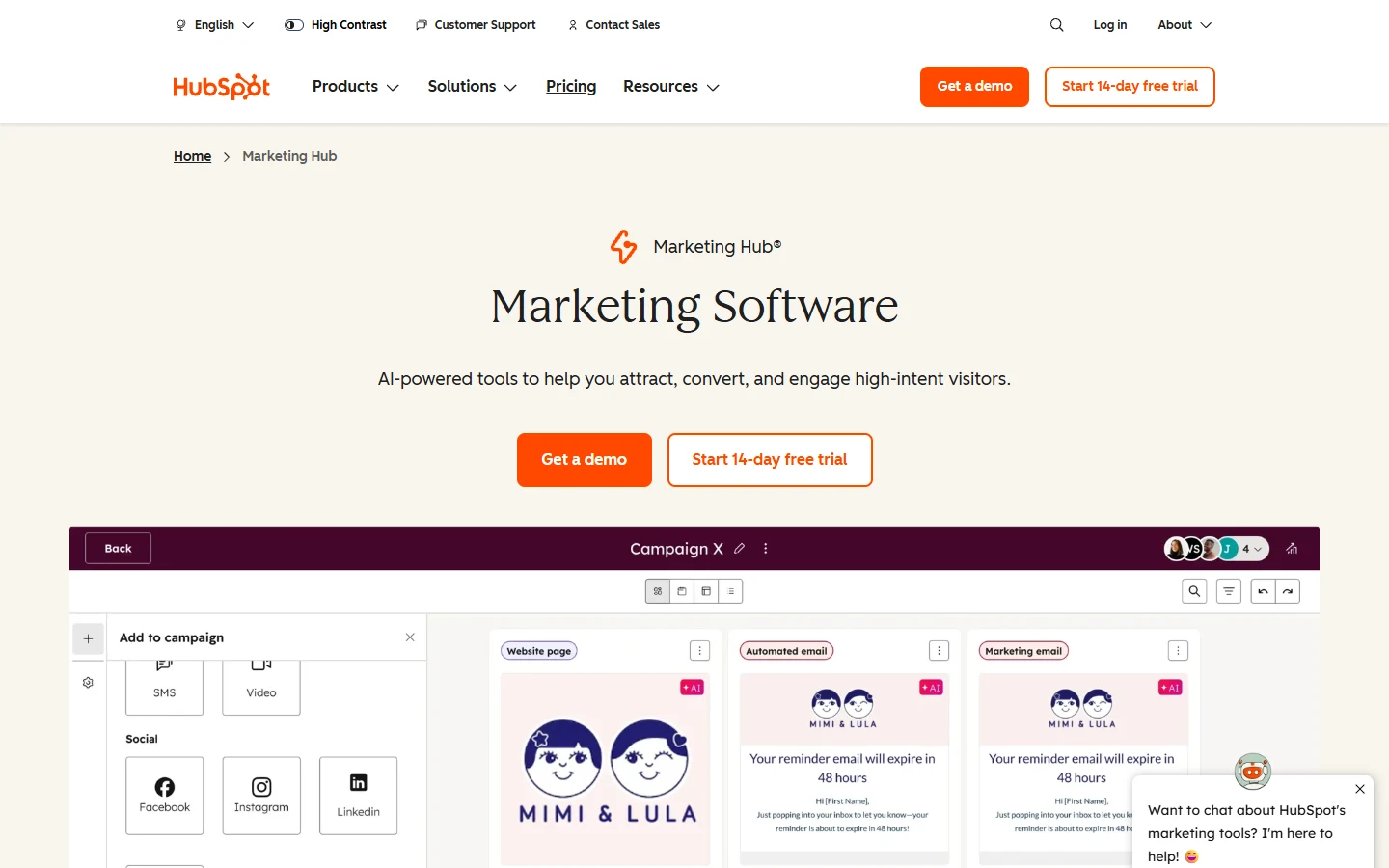
HubSpot’s marketing tools sit inside the same platform as its CRM, which is the main reason teams choose it: contact records, deal stages, and marketing activity live in one place instead of being synced between separate tools. Lead scoring, landing pages, and forms all feed directly into the same contact timeline sales sees, so a marketing automation trigger can hand off to a sales rep without a separate integration. The free tier is genuinely usable for very small lists, but the jump to Professional is steep, and HubSpot’s per-seat pricing plus a mandatory one-time onboarding fee at higher tiers catches a lot of buyers off guard.
Pricing: Free plan available (2 users, 2,000 email sends/month). Starter from $7/month per seat. Professional from $800/month (includes 3 seats), plus a $3,000 one-time onboarding fee. Enterprise from $3,600/month (includes 5 seats), plus a $7,000 onboarding fee.
- Good for: Teams that want marketing and CRM data in one system, not two synced platforms.
- Weak point: The Starter-to-Professional price jump is large, and the onboarding fees aren’t optional at higher tiers.
ActiveCampaign
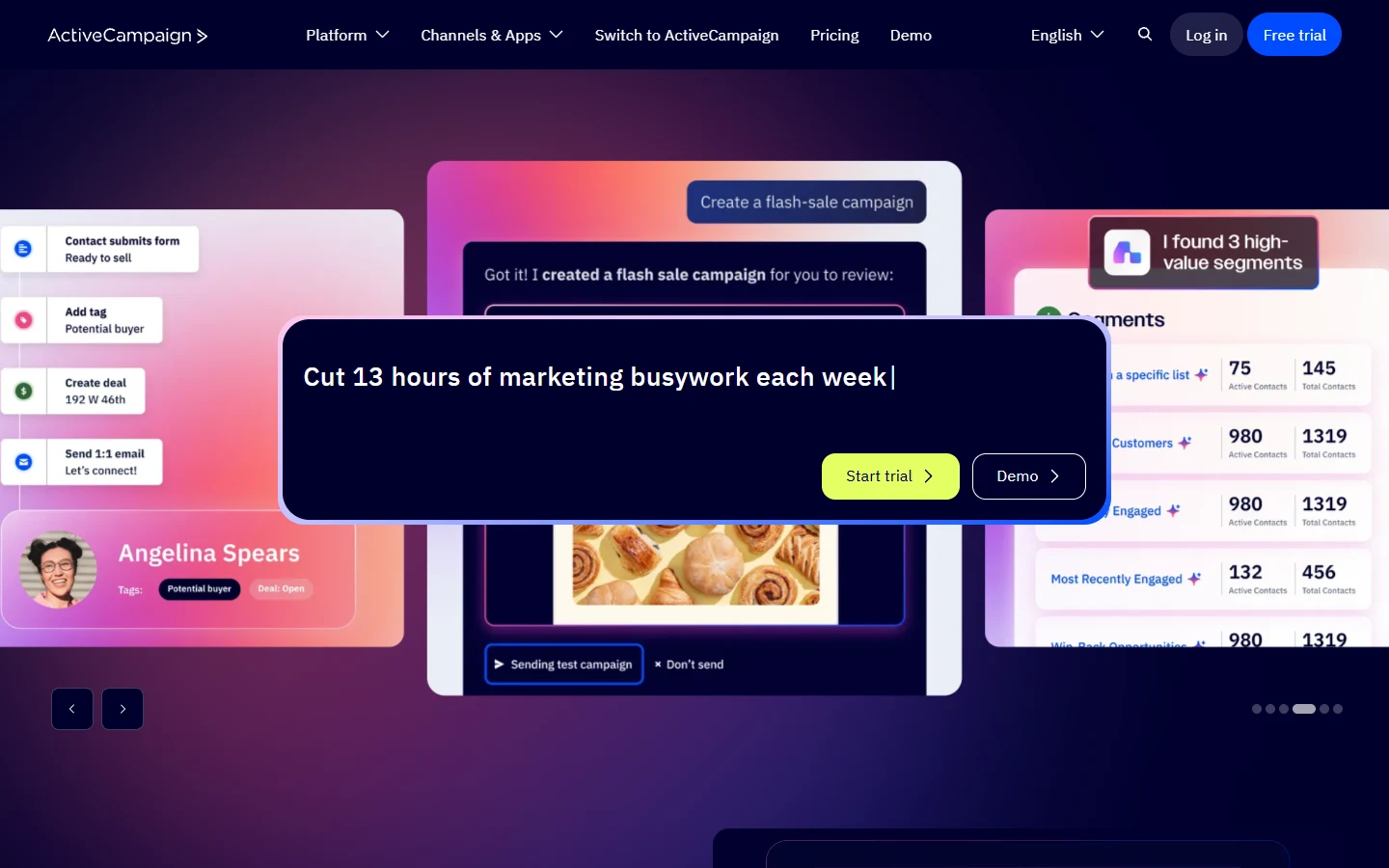
ActiveCampaign’s real strength is its automation builder: branching workflows, conditional logic, and lead scoring that go noticeably deeper than most tools at this price point. Site tracking is built in too, so a workflow can trigger off a specific page visit, not just an email open or click. It doesn’t have a free plan, and the interface takes longer to learn than something like Mailchimp, but for a business that genuinely needs multi-step automation instead of a nicer-looking newsletter, this is usually the right trade.
Pricing: No free plan. Starter from $15/month (billed annually, 1,000 contacts); roughly $19/month billed monthly. Plus from $49/month. Pro from $79/month. Enterprise from $145/month. All tiers scale with contact count.
- Good for: Businesses that need genuinely complex, conditional automation, not just scheduled sends.
- Weak point: No free tier, and the automation builder has a real learning curve.
Klaviyo
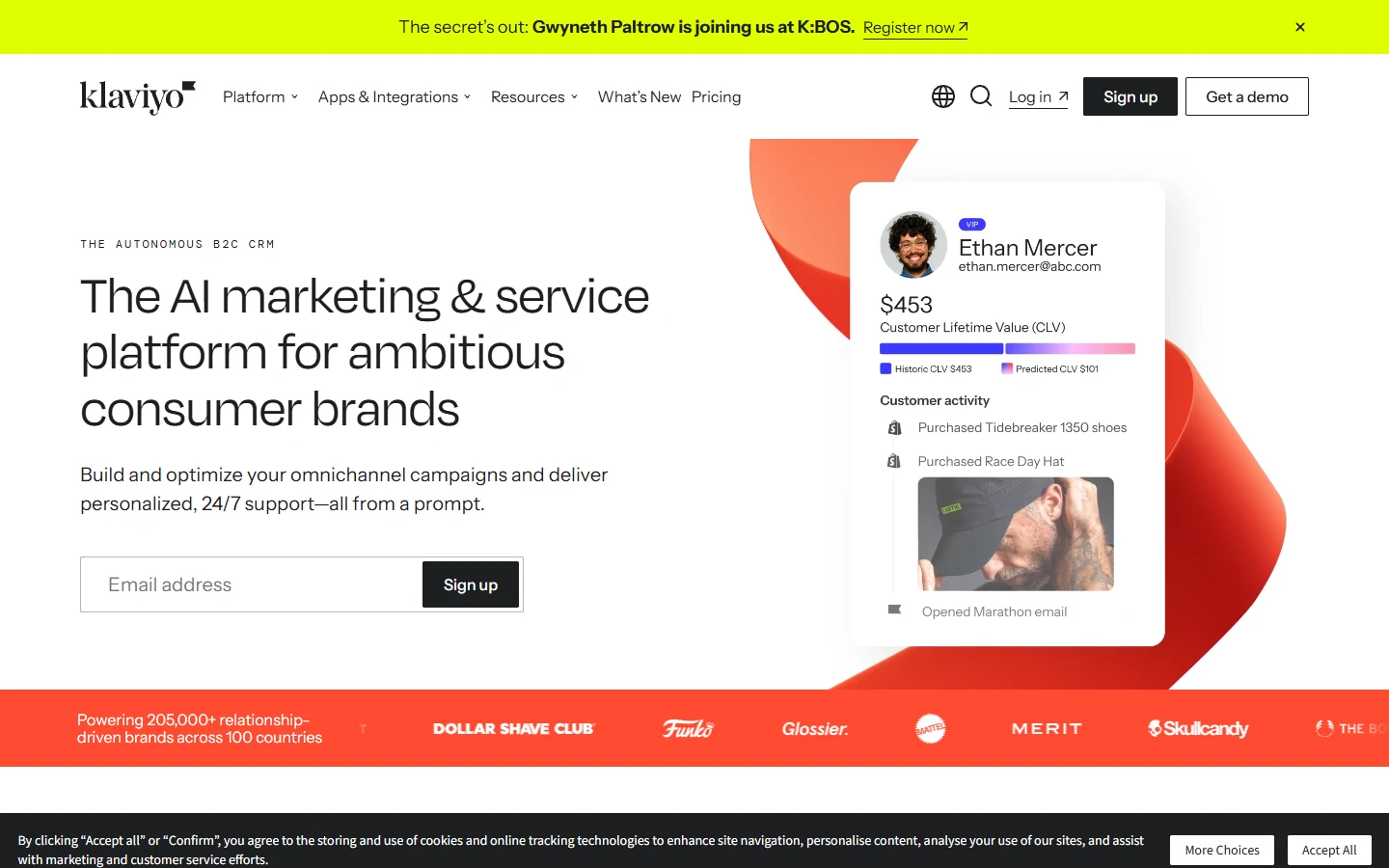
Klaviyo is built specifically for ecommerce, with deep native integrations for Shopify, WooCommerce, and similar platforms, plus predictive analytics like customer lifetime value that most competitors bolt on as an afterthought. Prebuilt flows for cart abandonment, back-in-stock alerts, and post-purchase follow-up are ready to switch on rather than built from scratch. Since February 2025, Klaviyo bills on active profiles, meaning every contact it could message, not just the ones you email regularly. That’s a real cost consideration once your list grows, and it’s worth weighing alongside the rest of your ecommerce marketing spend rather than in isolation.
Pricing: Free plan available (up to 250 active profiles, 500 email sends/month). Email plan from around $20/month at 500 profiles, scaling with active profile count. SMS is billed separately on top.
- Good for: Ecommerce brands that want deep store-data integration, not a general-purpose email tool.
- Weak point: Active-profile billing can raise your bill faster than list-based pricing on other platforms.
Brevo
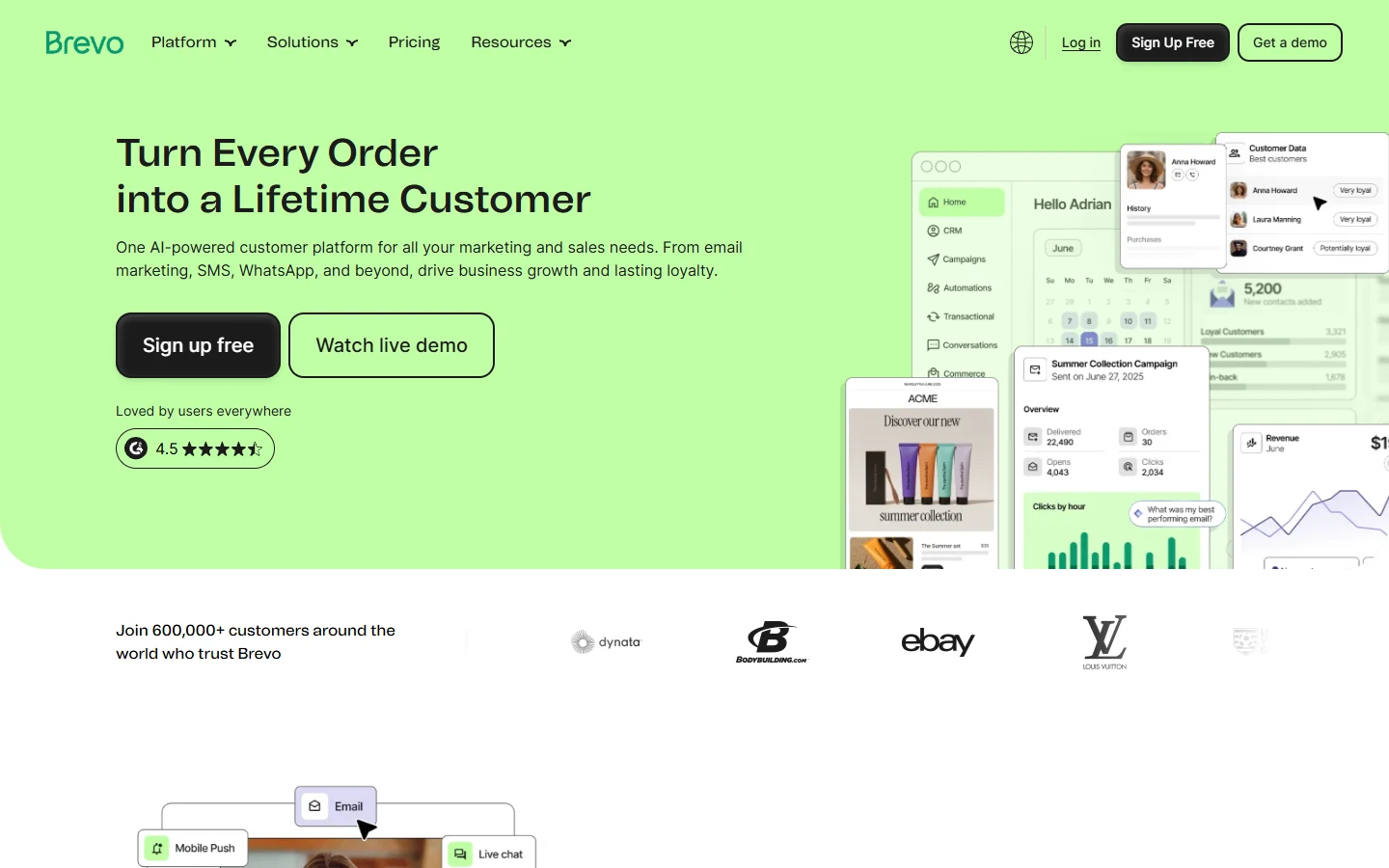
Brevo (formerly Sendinblue) prices by email volume instead of contact count, which makes it genuinely cheap for businesses with large lists that don’t email often. Its free plan allows unlimited contacts, capped at 300 emails a day, which is unusually generous compared to the contact-capped free tiers most competitors offer. It also includes SMS and WhatsApp campaigns alongside email, plus a transactional email API for developers who need to send order confirmations and receipts through the same account. Automation depth is solid but not in ActiveCampaign’s league.
Pricing: Free plan available (unlimited contacts, 300 emails/day). Starter from $9/month (5,000 emails/month). Standard from $18/month (5,000 emails/month, adds automation). Professional at $499/month. Enterprise on request.
- Good for: Large contact lists that don’t need frequent sends, where volume-based pricing beats contact-based pricing.
- Weak point: Automation and segmentation are functional rather than advanced compared with ActiveCampaign or HubSpot.
Omnisend
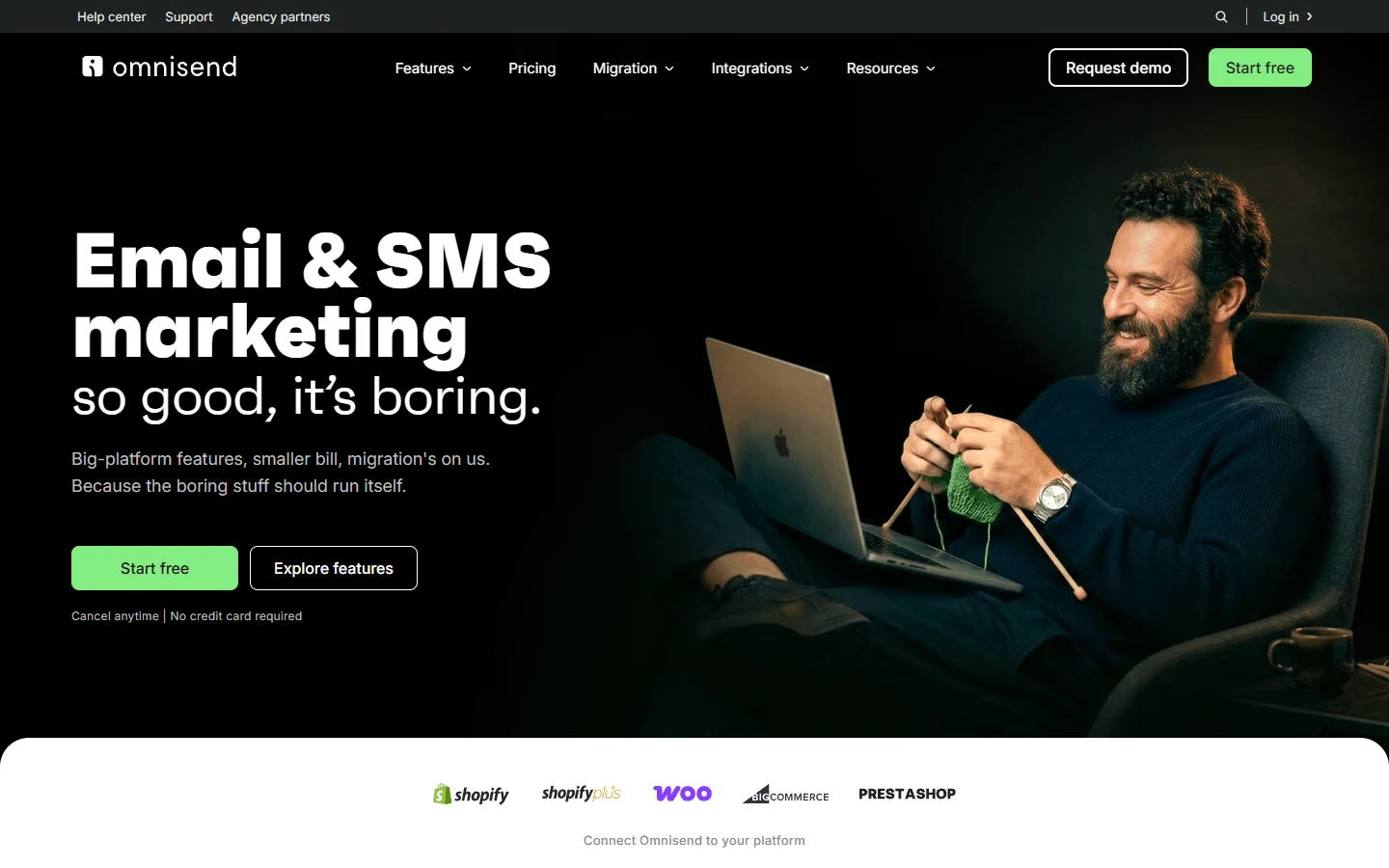
Omnisend positions itself directly against Klaviyo for ecommerce, at a noticeably lower price at the entry tiers. It covers email, SMS, and web push from one workflow builder, with prebuilt automation templates for cart abandonment and welcome series that are ready to use with minimal setup. Its Shopify, WooCommerce, and BigCommerce integrations sync product and order data automatically, so segments like “bought X but not Y” work without manual list building. It’s a reasonable Klaviyo alternative for stores that don’t need Klaviyo’s deeper predictive analytics.
Pricing: Free plan available (250 contacts, 500 emails/month). Standard from $11.20/month (500 contacts, 6,000 emails/month). Pro from $41.30/month (2,500 contacts, unlimited emails, SMS from $0.007 each). Custom pricing above 150,000 contacts.
- Good for: Smaller ecommerce stores that want Klaviyo-style automation without Klaviyo’s price at scale.
- Weak point: Less depth in predictive analytics and customer data modelling than Klaviyo.
GetResponse
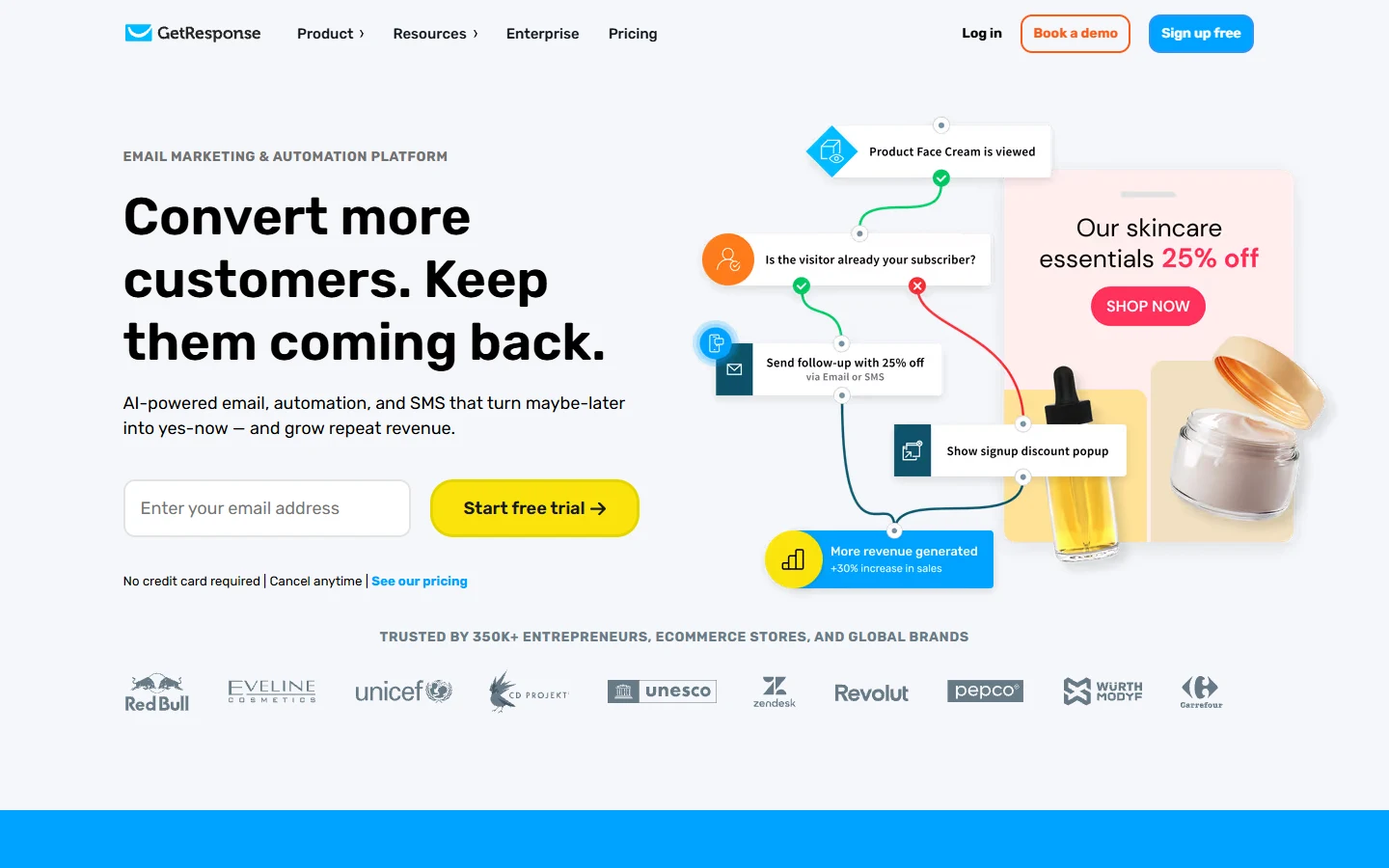
GetResponse bundles automation with a landing page builder, webinar hosting, and a course creator, which makes it a genuinely different shape of tool from the others on this list: less “email platform,” more “small marketing stack in one subscription.” Its conversion funnel feature strings landing pages, emails, and payment collection into a single sequence, aimed at businesses selling directly rather than just nurturing leads. That breadth is useful if you’d otherwise be paying for three separate tools, and less useful if you only need automation and don’t want to pay for webinar hosting you’ll never use.
Pricing: No permanent free plan; 14-day free trial. Starter from $15.58/month (billed annually). Marketer from $48.38/month. Creator from $56.58/month (adds webinars and course creation). Enterprise on request.
- Good for: Businesses that want automation, landing pages, and webinars under one subscription instead of three.
- Weak point: You’re paying for breadth whether or not you use all of it; not the cheapest option for email alone.
Mailchimp
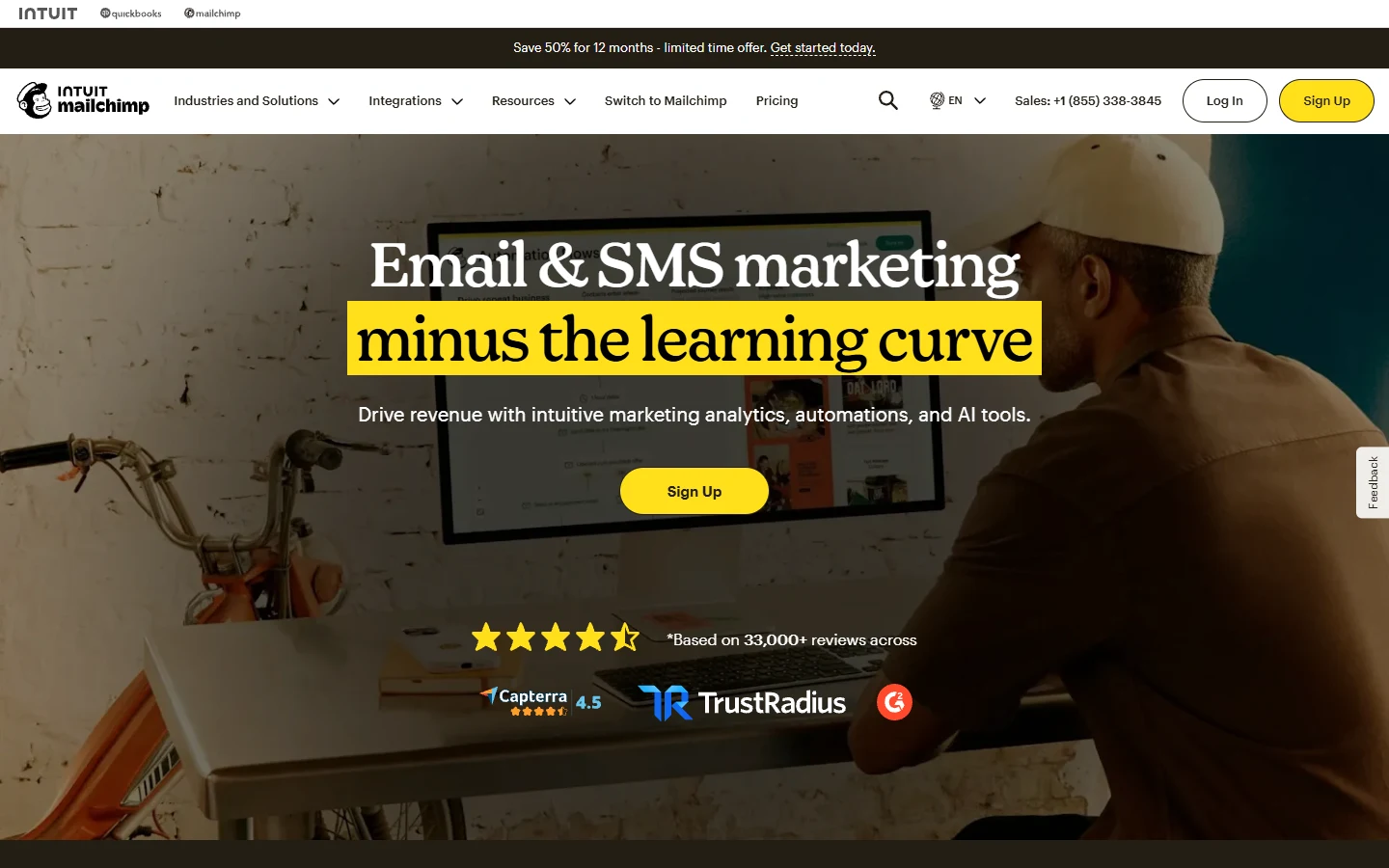
Mailchimp remains the most recognisable name on this list, and its free plan is still a genuinely reasonable starting point for a very small list. Now owned by Intuit, it also connects directly with QuickBooks, which is a real convenience for small businesses already using Intuit’s accounting tools to track order and customer data. Its automation has improved over the years but is still generally considered less capable than ActiveCampaign’s at similar price points. One thing worth knowing before you commit: Mailchimp charges for every contact on your list, including unsubscribed ones, unless you manually archive them.
Pricing: Free plan available (up to 250 contacts, 500 emails/month). Essentials from $13/month (500 contacts). Standard from $20/month (adds advanced automation). Premium from $350/month.
- Good for: Small lists and businesses that want a familiar, well-documented tool with a low barrier to entry.
- Weak point: Billing includes unsubscribed contacts unless you archive them manually; automation trails ActiveCampaign in depth.
Keap
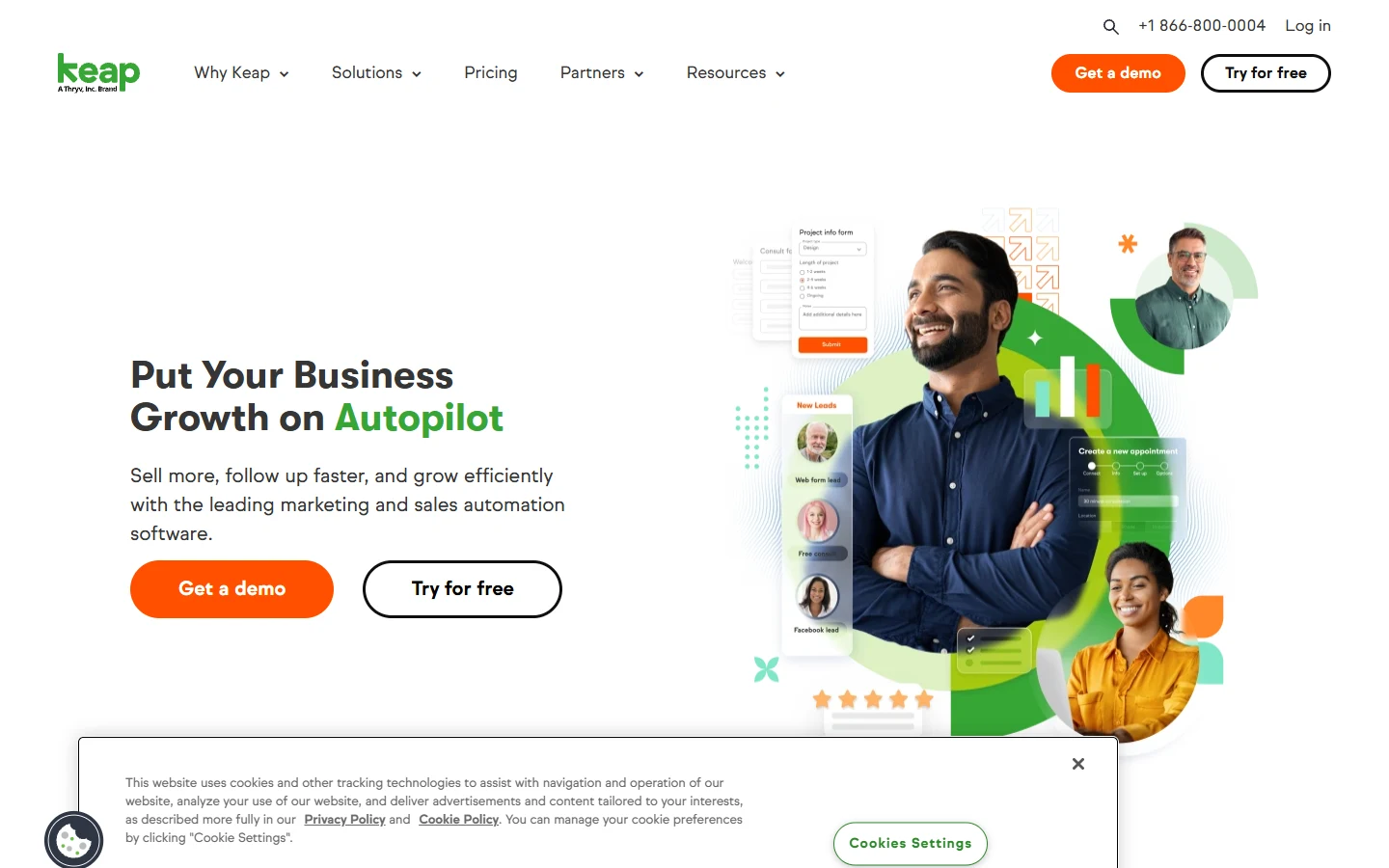
Keap combines a CRM with marketing and sales automation, aimed squarely at small businesses that want pipeline tracking and follow-up automation in one system instead of separate CRM and email tools. Appointment scheduling and invoicing are built in alongside the automation builder, which suits service businesses that need to move a lead from first contact to booked, paid client without switching software. As of 2026, Keap has moved away from its older tiered plan structure (Pro, Max, Ultimate) to a single published plan; existing customers on the old tiers can stay on them, but new sign-ups get one flat offering.
Pricing: No free plan. Single current plan at $299/month billed monthly, or an effective $249/month billed annually. Additional users and contacts beyond the included limits cost extra.
- Good for: Small businesses that want CRM and marketing automation genuinely combined, not integrated via a third-party connector.
- Weak point: The highest entry price on this list, with no lower tier to grow into.
How the Eight Platforms Stack Up on Price
| Platform | Free plan | Entry price | Best for |
|---|---|---|---|
| HubSpot Marketing Hub | Yes | $7/mo per seat | Marketing + CRM in one system |
| ActiveCampaign | No | $15/mo | Complex, branching automation |
| Klaviyo | Yes | ~$20/mo | Ecommerce, deep store data |
| Brevo | Yes | $9/mo | Large lists, low send frequency |
| Omnisend | Yes | $11.20/mo | Budget ecommerce automation |
| GetResponse | Trial only | $15.58/mo | Automation + webinars + funnels |
| Mailchimp | Yes | $13/mo | Small lists, familiar interface |
| Keap | No | $299/mo (or $249/mo annual) | CRM + automation combined |
Which One Actually Fits Your Business
If you’re running an online store on Shopify or WooCommerce and want predictive analytics along with automation, Klaviyo is the most purpose-built option, with Omnisend as the lower-cost alternative once budget matters more than depth. If your list is large but you don’t email often, Brevo’s volume-based pricing will usually beat contact-based competitors on cost. If you need genuinely complex, conditional automation and don’t mind a learning curve, ActiveCampaign goes deeper than anything else here at a comparable price. If marketing and sales need to share one system rather than syncing between two, HubSpot or Keap are the two built around that idea, at very different price points. If you mainly need reliable email with light automation and a gentle learning curve, Mailchimp or GetResponse’s Starter tier will cover it without paying for capability you won’t use.
Picking a platform is only the first decision; getting real results out of it usually depends more on strategy and execution than the tool itself. If you’d rather have that side handled than configure it yourself, our digital marketing services cover this alongside the rest of a client’s marketing setup.
Frequently Asked Questions
What is the cheapest marketing automation software with a free plan?
Brevo’s free plan is the most generous on contact limits, allowing unlimited contacts capped at 300 emails a day. HubSpot, Klaviyo, Omnisend, and Mailchimp all offer free plans too, but cap both contacts and monthly sends at a low threshold.
Which marketing automation software is best for ecommerce?
Klaviyo is the most purpose-built for ecommerce, with native Shopify and WooCommerce integrations and predictive analytics like customer lifetime value. Omnisend covers similar ground at a lower price for stores that don’t need Klaviyo’s deeper data modelling.
Is ActiveCampaign better than Mailchimp?
For automation depth, ActiveCampaign is generally considered stronger, with more advanced branching logic and conditional workflows. Mailchimp is easier to learn and has a genuinely usable free plan, which makes it a reasonable choice for smaller lists or simpler automation needs.
Does marketing automation software price by contacts or emails sent?
Most platforms on this list, including HubSpot, ActiveCampaign, Klaviyo, Omnisend, and Mailchimp, price primarily by contact or profile count. Brevo is a notable exception, pricing by email volume instead, which can be significantly cheaper for large lists that aren’t emailed frequently.
Do any of these platforms include a CRM?
HubSpot and Keap both build marketing automation directly into a CRM rather than treating it as a separate connected tool. The other platforms on this list focus on marketing channels and typically integrate with a separate CRM rather than including one natively.